How to Potty Train a Australian Shepherd Puppy
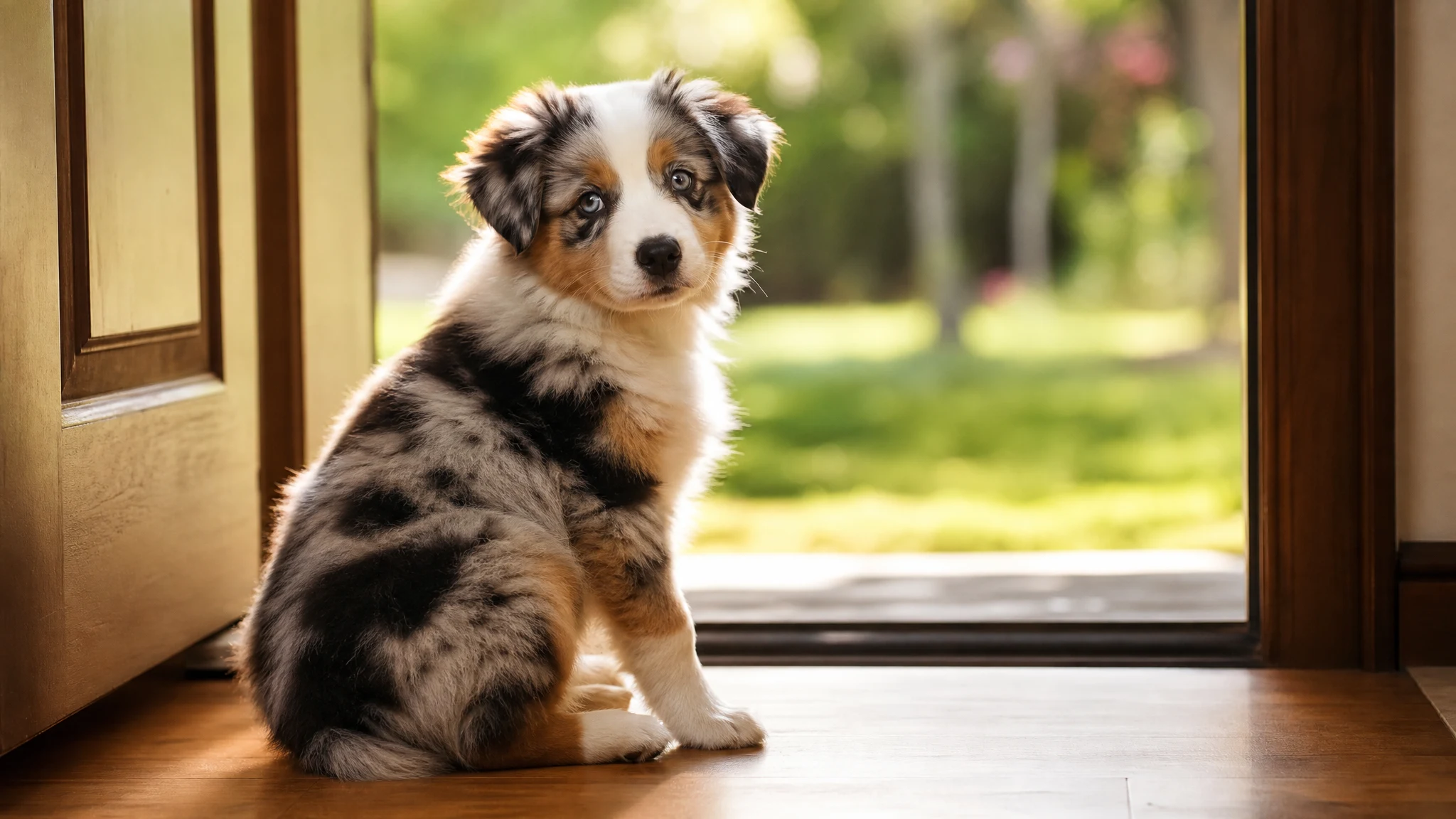
General training information. Every dog is an individual; for health or behavior concerns, see your veterinarian.
Australian Shepherd potty training goes best when you treat it as a management job first and a teaching job second. Your puppy cannot learn where to go if they have too many chances to get it wrong.
This guide walks through a schedule-based plan, how to use a crate well, what to do after accidents, and what to expect along the way. It is written for owners who want a calm, reward-based approach that matches the guidance of the American Veterinary Society of Animal Behavior (AVSAB).
What the Breed Brings to House Training
The United States Australian Shepherd Association (USASA), the breed's parent club, describes the Aussie as intelligent and eager to please. It also says the breed is easily trained and easily housebroken. That is encouraging, and it matches why many owners start with some confidence.
Still, every puppy is an individual. A smart, eager puppy can learn the wrong routine just as quickly as the right one. If your puppy has free run of the house and gets attention for every squeak, they will learn that too.
USASA's breed standard also notes that an Aussie may be somewhat reserved at first meeting. Some puppies are a bit cautious in new places. If your puppy hesitates to go outside in a new yard or on a new surface, give them a few quiet minutes instead of hurrying them. The standard lists shyness and fear as faults, so a puppy that seems worried deserves patience and good socialization.
Size matters for planning, too. USASA gives adult weight as about 50 to 65 pounds for males and about 40 to 55 pounds for females. The breed standard lists height as 20 to 23 inches for males and 18 to 21 inches for females. Your puppy will outgrow a small crate, so plan for adult size when you buy one.
USASA's breed pages do not give figures for bladder capacity or say how long a puppy can wait between trips. For that, ask your veterinarian, who can judge your puppy's age and health.
Materials You Will Need
- A crate sized for your adult dog, with a divider so you can shrink the space while your puppy is small.
- Small, soft treats that your puppy can swallow in a second. Use something your vet says is fine for your puppy.
- A standard flat collar or harness and a leash for trips outside, so you can guide your puppy to the same spot each time.
- An enzyme-based cleaner made for pet accidents. It helps remove odor so your puppy is less likely to return to the same spot.
- A baby gate or exercise pen to keep your puppy in a small, safe area when you cannot watch.
- A notebook or phone notes for logging meals, naps, and trips outside.
- A cue word, such as "go potty," that you pick and everyone in the home uses.
Step-by-Step: How to Potty Train a Australian Shepherd
Step 1: Choose one potty spot outside
Pick a patch of yard that is easy to reach and not too distracting. Take your puppy there on leash every time, even if you have a fenced yard.
Walking to the same place builds a pattern. The smell of earlier visits also helps your puppy understand the job.
Step 2: Build a schedule around your puppy's day
Young puppies need frequent trips. Plan on taking your puppy out at these moments:
- First thing in the morning, before anything else.
- Right after every nap.
- Shortly after meals and drinks.
- After a play session or a burst of excitement.
- Before you put your puppy in the crate and right when you let them out.
- Last thing before bed.
In the first weeks, that can mean a trip every hour or two while awake. Your vet can help you set the right spacing for your puppy's age. As your puppy matures, you can stretch the time between trips gradually.
Feed at set times instead of leaving food out. Predictable meals make for more predictable potty breaks, and your log will show you the pattern.
Step 3: Go out, stay boring, and wait
Walk to the spot, then stand still. Skip the chatting and the playing. A boring minute or two teaches your puppy that this spot is for business.
When your puppy starts to go, say your cue word softly. Do not interrupt or crowd them.
Step 4: Reward right away
The instant your puppy finishes, give a treat and quiet praise. Timing is everything here. A treat handed over after you walk back inside rewards the wrong thing.
Carry treats in your pocket, and take one out to the spot every single trip. After that, you can follow with a short walk or play as an extra reward.
Step 5: Use the crate as a tool, not a punishment
Most dogs avoid soiling the place where they rest, which is why a crate helps. Your puppy should have room to stand, turn around, and lie down comfortably. Use the divider so they cannot use one end as a toilet.
Make the crate pleasant. Feed some meals in there, toss in treats, and offer a safe chew. Never send your puppy to the crate as a punishment, or they may stop trusting it.
Crate time is for naps and short stretches when you cannot supervise. Do not leave a young puppy there longer than they can reasonably manage. If you are unsure how long that is, ask your vet or a certified trainer who uses reward-based methods.
Take your puppy straight outside when you open the crate. Do not stop to cuddle first.
Step 6: Supervise closely when out of the crate
When your puppy is loose in the house, keep them in the same room as you. Use a gate or a leash tied to your belt if needed.
Watch for these signs that a puppy needs to go:
- Sniffing the floor in circles.
- Suddenly stopping play and wandering off.
- Whining or heading toward the door.
- Squatting or starting to circle.
If you see any of these, calmly pick your puppy up or lead them straight outside.
Step 7: Handle accidents without punishment
Accidents will happen. If you catch your puppy in the act, make a small interrupting sound, scoop them up, and finish outside. Then reward if they go there.
If you find a mess later, clean it with an enzyme cleaner and say nothing. Your puppy cannot link a scolding to something that happened minutes ago. Rubbing a nose in it, yelling, or scaring your puppy can make them hide when they need to go, which makes training harder.
Treat each accident as information. Ask yourself: Was the trip too long ago? Did I miss the signs? Did I give too much freedom too soon? Then adjust the schedule.
Step 8: Add freedom slowly
After a stretch of mostly clean days, let your puppy into one more room, with you present. If accidents return, go back a step. There is no shame in that.
Many owners rush this part. A puppy who is clean for a week still needs plenty of supervision.
Tips for Aussie Households
- Tire the brain and the body. USASA describes the breed as very active and says Aussies need a great deal of daily exercise to avoid boredom or frustration. A bored puppy may get into mischief that includes accidents. Ask your vet what exercise is right for a growing puppy, since young joints need care.
- Keep outings structured. A herding-type puppy can get excited by yard movement. Do business first, then play, so the excitement does not crowd out the task.
- Have everyone use the same cue and routine. Smart puppies pick up on inconsistency quickly.
- Socialize alongside house training. USASA's buyer checklist asks that puppies stay with littermates until at least 8 weeks and be well socialized. Keep that going at home with gentle, positive exposure to new people and places.
- Stay calm. A puppy that senses frustration may tense up. Quiet, cheerful routines work better.
- Plan for weather. Rain and cold can put a puppy off going out. Walk them to the spot anyway, and consider an umbrella for yourself.
Common Mistakes to Avoid
- Giving too much freedom too early. This is the most common cause of repeated accidents.
- Rewarding late. Treats given inside the door do not tell your puppy what you liked.
- Punishing accidents. Reward-based training is the approach supported by AVSAB. Punishment does not teach where to go and can damage trust.
- Skipping the leash. Without it, a puppy can wander off and sniff instead of going.
- Leaving water and food on no schedule. It makes timing hard to predict.
- Using a crate that is too big. A large crate with no divider can become a bedroom and a bathroom.
- Ignoring pee pads as a habit. If your goal is outdoor potty habits, pads can confuse the message. Pick one plan and stick with it.
- Changing the plan every few days. Dogs learn from repetition.
When Something Seems Off
Not every accident is a training problem. If your puppy suddenly starts having accidents after doing well, passes urine very often, strains, or has loose stools, call your veterinarian. Medical problems can look like house training setbacks, and only a vet can sort that out.
Your vet is also the right person to ask about feeding amounts, exercise, and any health screening questions for your puppy. USASA's health program page lists the screens the parent club follows, which you can review with your vet and your breeder.
What to Expect and How Long It Takes
There is no single timeline. USASA calls the breed easily housebroken, and many Aussie owners find that a steady routine brings good progress. Even so, puppies vary by age, background, and the consistency of the household.
With a steady schedule, close supervision, and good timing on rewards, you may see fewer accidents within a few weeks. Expect some setbacks along the way, especially during growth spurts, a move, a new family member, or a change in routine.
Reliability usually comes gradually, not all at once. Some puppies are mostly clean in the house fairly quickly, while others need many months before you can relax the rules. If you are worried about your puppy's pace, a certified trainer who uses reward-based methods or your vet can give you a better read than any chart.
No method comes with a promise. Consistency, patience, and good management give you the best chance.
A Simple Daily Checklist
- Out first thing in the morning, then reward.
- Breakfast at the same time each day, then out again.
- Supervised play, then out before crate time.
- Out after every nap and every meal.
- Log accidents and adjust the schedule.
- Final trip right before bed.
Keep the list on the fridge so everyone in the home follows it.
Final Thoughts
House training an Australian Shepherd is mostly about showing up on time, rewarding the right thing, and keeping the puppy from practicing mistakes. Your puppy's intelligence and eagerness to please are on your side. Give them a clear routine and plenty of calm repetition, and the habit has a good chance of sticking.