How to Train a Australian Shepherd: The Complete Guide
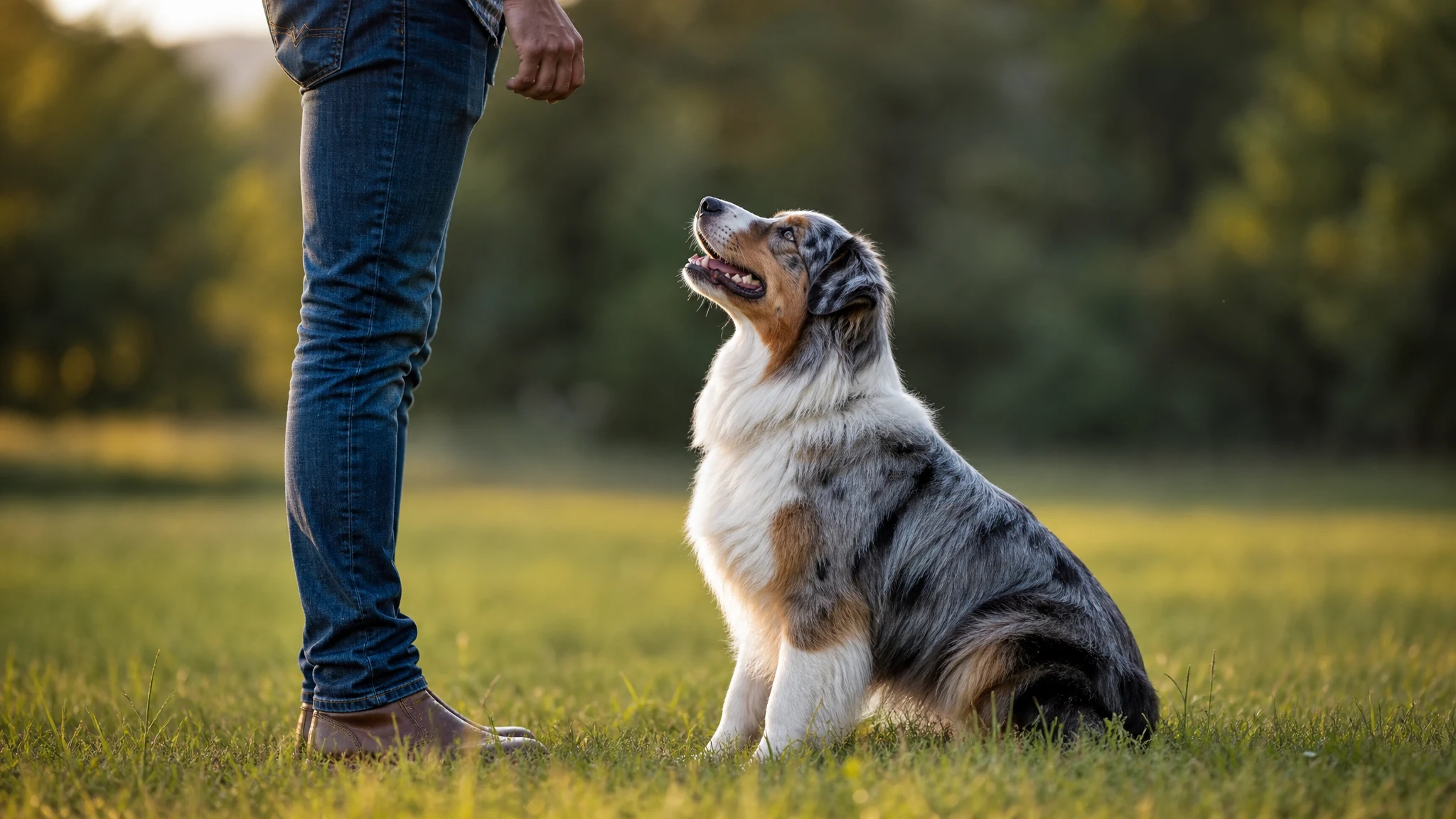
General training information. Every dog is an individual; for health or behavior concerns, see your veterinarian.
Australian shepherd training is a different job from training the average family dog. This is a thinking, active, working-bred dog. It will learn quickly, and it will also learn the wrong things quickly if its days are empty.
This guide covers how to train an Australian Shepherd from the first weeks home through adulthood. It explains what the breed was made for, how that shapes your plan, which rewards work, how much mental and physical work to provide, and which problems to plan for early. Every method here is humane and reward-based, in line with the American Veterinary Society of Animal Behavior (AVSAB).
Key takeaways
- The United States Australian Shepherd Association (USASA) describes the breed as a versatile farm and ranch dog that works stock. Your training plan should give that brain a job.
- USASA calls the breed intelligent, eager to please and easily trained. Easy to teach also means easy to teach by accident, so be deliberate.
- USASA says the breed is very active and needs a great deal of daily exercise to avoid boredom or frustration.
- Herding instinct, high activity and protectiveness of possessions are the main challenges USASA names. Plan for them before they become habits.
- Use food, play and praise. Skip shock, prong and choke collars, alpha rolls, scruffing and any dominance method.
- Questions about pain, sudden behavior change, medication or health testing go to your veterinarian.
In this guide
- What the Australian Shepherd was bred to do
- Before you start: the foundation
- Training stages from puppy to adult
- Motivation that works for this breed
- Exercise and mental work
- Challenges to plan for
- Health, testing and when to get help
- Sources
What the Australian Shepherd was bred to do
Start with the job, because the job explains the dog.
A versatile working dog from the United States
Despite the name, USASA says the breed as it exists today developed in the United States. It was named for its association with Basque sheepherders. USASA describes the original purpose as a versatile farm and ranch dog that works stock.
That history matters for training. A dog bred to work livestock alongside people is built to watch, decide and act. It is not built to lie on the couch waiting for something to happen.
Size and build
The USASA breed standard gives height as 20 to 23 inches for males and 18 to 21 inches for females. USASA's breed overview gives weight as about 50 to 65 pounds for males and about 40 to 55 pounds for females. This is a medium-sized dog. It is strong enough to pull on a leash and fast enough to outrun a slow recall, so training matters.
Temperament, as the parent club describes it
The USASA breed standard describes the temperament as intelligent and active, with an even disposition. It calls the breed good natured and seldom quarrelsome. It also says an Aussie may be somewhat reserved at first meeting. The same standard says any shyness, fear or aggression is a fault.
Two practical points follow from that wording:
- Reserved is not the same as fearful. A dog that takes a minute to warm up to a stranger can be normal for the breed. A dog that hides, freezes or lunges needs help and a calm, patient plan.
- Individual dogs vary. A breed description tells you what to expect on average. Your dog is the one in front of you. Train the dog you have.
What the parent club says about trainability
USASA says the breed is easily trained and easily housebroken, being intelligent and eager to please. That is encouraging, and it is mostly true in the way people hope. Aussies tend to love working with their person.
The honest part is the flip side. A dog that learns fast learns everything fast: sitting politely, but also barking at the window, circling the kids, or tugging the leash if those things pay off. In my experience with working breeds, the owners who struggle are rarely the ones with a dull dog. They are the ones whose clever dog filled the gaps with its own projects.
Before you start: the foundation
Good Australian Shepherd training tips start before the first lesson. Set the house up so the right behavior is easy and the wrong behavior is hard to rehearse.
Choose your source carefully
If you are getting a puppy, the USASA Buyers Checklist asks that the breeder keep a puppy with its littermates until at least 8 weeks of age and that the puppy be well socialized. The checklist also tells buyers to discuss herding instinct with the breeder. Those are good questions to ask before you commit, and they are the first step in training.
If you are adopting an adult, ask the rescue what they know about the dog's history, energy and behavior around people, dogs and stock. Be honest about your household. A good match saves everyone grief.
Gear that supports humane training
Keep the equipment simple:
- A well-fitted flat collar or a front-clip or back-clip harness, and a standard leash of about six feet.
- A crate or a gated puppy area for rest and for times you cannot supervise.
- Small, soft, smelly treats that can be eaten in a second.
- A few toys: a tug toy, a ball or flirt pole, and food puzzles or chew items.
Leave out shock, prong and choke collars. They rely on discomfort, they can damage the relationship with a sensitive, thinking dog, and they are not in line with AVSAB guidance. You do not need them to teach an eager-to-please breed.
Manage the environment
Management is training. It stops the dog from practicing problems while it learns better habits.
- Use baby gates and doors to limit access when you cannot watch.
- Keep a fenced yard secure. A bored, quick dog finds the weak spot in a fence.
- Put chew items and toys where the dog can reach them, and keep your own belongings out of reach.
- Build a daily routine. Meals, walks, training and rest at predictable times help a busy mind settle.
Training stages from puppy to adult
Age ranges below are rough guides, not deadlines. Dogs mature at different speeds, and your veterinarian is the right person to ask about vaccine timing and when it is safe to go out in public places.
Stage 1: The first weeks at home
Your goals in the first days are simple: let the puppy settle, learn the routine, and start to feel safe with you.
- Name and attention. Say the name, mark eye contact with a cheerful "yes," and give a treat.
- Housetraining. USASA says the breed is easily housebroken, but easy is not the same as automatic. Take the puppy out after sleeping, eating, playing and drinking, and reward it right away when it goes in the right spot.
- Crate and rest. Feed a few meals in the crate, hand out chews there, and keep sessions short. Aim for a puppy that sees the crate as a quiet den, not a punishment.
- Handling. Gently touch paws, ears and collar while giving treats. This makes grooming and vet visits easier later.
Stage 2: Socialization and early manners
USASA's checklist stresses that a puppy should be well socialized. Keep that going after the puppy comes home. Introduce new people, surfaces, sounds, and calm, friendly dogs in a controlled, positive way. Let the puppy move at its own pace.
Since the breed standard notes that Aussies can be reserved with strangers, do not force greetings. Let the puppy watch from a distance, toss a treat, and let curiosity do the work. Short, happy exposures beat long overwhelming ones.
Start the basics in this stage:
- Sit, down and come. Lure with a treat, then fade the lure into a hand signal.
- Leash introduction. Let the puppy wear a light leash around the house, then walk a few steps indoors.
- Settle on a mat. Reward the puppy for lying on a mat. Soon it will go there on cue.
- Bite inhibition with toys. Redirect mouthing to a toy and end play calmly if teeth land on skin.
Stage 3: Adolescence
Adolescence is where good puppies seem to forget everything. This is normal. Hormones, growing confidence and a love of chasing things collide.
- Go back to easier criteria. Reward more often and practice in quieter places.
- Keep recall on a long line until it is reliable. A dog bred to move stock will often choose chasing over listening.
- Add duration, distance and distractions one at a time, never all three together.
- Keep exercise structured. A wild free-for-all teaches the dog to get more excited, not calmer.
This is also where herding instinct often shows itself, such as stalking, circling and nipping at moving things. Redirect it early, as covered in the challenges section below.
Stage 4: Young adulthood
Once the basics hold up, give the dog more to do. This stage is the time to:
- Proof skills in new places: parks, pet-friendly stores where allowed, friends' homes.
- Teach loose-leash walking with real-world distractions.
- Learn a sport, trick set or job (see the exercise section).
- Practice calm alone time so the dog can relax without constant attention.
Stage 5: Adulthood and beyond
An adult Aussie still needs a job. Keep training sessions going, even if they are short. Rotate new tricks and games to keep the mind fed. Many owners find that a few minutes of training a day does more than one long weekend session.
As the dog gets older, watch for changes in energy, movement or behavior. Do not assume it is just age or attitude. Talk to your veterinarian about anything that looks like pain, stiffness or a sudden change.
Motivation that works for this breed
Because USASA describes the breed as eager to please, you start with a real advantage. Your job is to make the rewards worth the effort and to keep training fun.
Food
Treats are the easiest way to teach new skills. Use tiny pieces, keep a variety of values (ordinary kibble at home, something special for distractions), and count the treats against daily meals if your dog gains weight easily. Ask your veterinarian about the right amount of food for your dog.
Play
A dog from working stock often loves movement. Tug, fetch and a flirt pole can all be rewards. Use play as a reward for a good recall, a nice heel, or a quiet settle. Keep the rules clear: the toy appears when the dog does the work, and the game stops if teeth hit skin.
Praise and attention
Many Aussies thrive on working with their person. A calm "good" and a scratch can mean a lot. Do not rely on praise alone for hard tasks, though. Pair it with food or play when the job is difficult.
The job itself
For a breed built to work, the activity can be the reward. Fetching a ball on cue, finding hidden toys, or carrying a small item are all satisfying jobs. Training that feels like a game keeps this dog engaged.
How to run a training session
- Keep sessions short, about five minutes for puppies and up to ten or fifteen for adults.
- Pick one goal per session.
- Mark the right behavior the instant it happens with a word like "yes," then deliver the reward.
- End on a success, even if you have to make the last step easier.
- Take a break before the dog is tired or frustrated.
What to avoid
Do not use alpha rolls, scruffing, yelling, or any dominance-style correction. AVSAB's position is that these methods carry risks of fear, aggression and damaged trust, and they are not needed. If your dog does something you dislike, interrupt calmly, redirect to a better behavior, and reward that.
Exercise and mental work
USASA says the Australian Shepherd is very active and needs a great deal of daily exercise to avoid boredom or frustration. It also names unmet needs as a frequent reason Aussies are surrendered to rescue groups. That is the single best argument for planning this part well.
Physical exercise
The parent club does not give a minutes-per-day figure, so use your dog's behavior as a guide and ask your veterinarian about what is safe for your dog's age and build. In general, think in several outings a day rather than one long one. Good options include:
- Brisk walks and sniff walks on a long line.
- Fetch, flirt pole and tug sessions with clear start and stop cues.
- Hiking or running once the dog is physically mature and your veterinarian agrees. Growing joints need care, so check before you add impact.
- Swimming where it is safe and the dog enjoys it.
Mental work
Exercise alone does not tire a clever dog. Add thinking:
- Food puzzles and snuffle mats for part of the meal.
- Scent games. Hide treats or a toy and tell the dog to find it.
- Trick training. Spin, weave through legs, close a door, fetch a named toy.
- Short training sessions scattered through the day.
Sports and jobs
USASA lists a range of roles for the breed: farm and ranch stock work, seeing-eye and utility dogs for people with physical disabilities, and sled dogs in northern areas. It also says USASA runs AKC sanctioned competitive events. The parent club's page I relied on does not list the specific events, so check the USASA website and the AKC for the current list and the rules for entering.
You do not have to compete. Many owners get great results from a weekly class, a hobby sport or a backyard obstacle set. What matters is that the dog has a regular, structured outlet.
Rest is a skill too
A dog that is always on the go can forget how to switch off. Teach settling as deliberately as you teach sit. Reward calm behavior on a mat, give chews in the crate, and keep some quiet time every day. A well-rounded Aussie can work hard and then relax.
Challenges to plan for
USASA is open about the difficult side of the breed. Its materials name a strong herding instinct, a high activity level and exercise needs, and a tendency to be highly territorial and protective of owners' possessions. Here is how to work with each.
Herding instinct
USASA's buyer checklist tells buyers to discuss herding instinct with the breeder, which tells you it matters. In a home, herding can look like chasing children, bikes, cars or other pets, staring, circling, or nipping at heels.
What helps:
- Teach a reliable "leave it" and "look at me." Reward the dog for turning toward you when it sees something moving.
- Redirect, do not punish. Offer a toy, a ball or a trick the moment the dog begins to stalk.
- Supervise around children. Teach kids to be calm and not to run and scream near the dog. Give the dog a safe place to retreat.
- Give the instinct a legal outlet. Chase games with a ball or flirt pole, or a herding-type activity, can satisfy the urge in a controlled way.
- Use long lines near roads and traffic. Never trust a recall around moving cars.
High activity and boredom
A bored Aussie invents its own work. That might be barking, digging, chewing or herding the family. The fix is not more punishment. It is a better daily routine with exercise, mental work and a clear rest period.
If your dog seems frantic even after exercise, look at your approach. Constant high-intensity games can wind a dog up. Mix in sniffing, puzzles and calm training.
Territorial and protective behavior
USASA says the breed can be highly territorial and protective of owners' possessions. That can show up as guarding food, toys, a favorite spot, a yard, or the car.
- Teach trade games early: swap an item for a better treat and give the item back when you can.
- Never take items by force from a guarding dog. Back away and ask a qualified trainer for help.
- Introduce visitors calmly and let the dog watch from a distance. Reward quiet behavior at the door.
- Remember the breed standard: shyness, fear and aggression are faults, not goals. If your dog growls, lunges or snaps, get a qualified, reward-based professional involved early.
Reserved with strangers
The breed standard says Aussies may be somewhat reserved at first meeting. Let your dog choose how close to go. Ask visitors to ignore the dog at first, toss treats from a distance, and avoid reaching over the head. Confidence grows when the dog feels it has a choice.
Barking and alerting
The parent club does not give a barking rating, so check with the breeder or rescue about the individual dog's habits. For any dog, the plan is the same: reward quiet, teach a "thank you, enough" cue, and manage the view out of windows if the barking becomes a habit.
Leash pulling and recall
A fast dog will pull if pulling gets it where it wants to go. Stop walking when the leash tightens, reward the dog for being beside you, and change direction often. Practice recall in a fenced area and then on a long line before you ever try it off leash in an open place.
Home alone
Teach alone time gradually. Start with seconds, build to minutes, and leave a chew or puzzle. If your dog panics, destroys things or drools and paces when you leave, speak to your veterinarian and a qualified reward-based trainer rather than punishing the dog.
Health, testing and when to get help
Training and health are tied together. A dog in pain cannot focus, and a dog that suddenly changes behavior may be telling you something is wrong.
Health screening for the breed
The USASA Health and Genetics Program lists the screening that matters for breeding dogs. For the Canine Health Information Center (CHIC), USASA says hip and elbow evaluation through the Orthopedic Foundation for Animals (OFA) is mandatory, and so is an eye evaluation by a certified veterinary ophthalmologist. USASA lists autoimmune thyroiditis, Collie Eye Anomaly and Multiple Drug Sensitivity (MDR1) as optional for CHIC.
USASA also lists other DNA tests, including degenerative myelopathy, hereditary cataracts (HSF4), hyperuricosuria, intestinal cobalamin malabsorption, PRA-prcd, multifocal retinopathy 1 (CRM1) and Pelger-Huet Anomaly. The health program page names hip dysplasia, drug sensitivity (MDR1), degenerative myelopathy, hereditary cataracts and multifocal retinopathy 1 among the conditions of interest.
If you are buying a puppy, ask the breeder which of these tests were done on the parents and ask to see the results. If you have a dog already, your veterinarian can tell you which tests or checks make sense. Only a veterinarian can diagnose or advise on medication, and that includes anything related to drug sensitivity.
Signs to take to your veterinarian first
- New reluctance to jump, run or climb stairs.
- Sudden aggression, fear or withdrawal.
- Changes in vision, such as bumping into things or hesitating in dim light.
- Loss of coordination or weakness in the back legs.
- Restlessness, house soiling or appetite changes that are new.
When to hire a trainer
Consider a professional if you see guarding, growling at people, fear of strangers that is getting worse, or herding behavior that is hurting children or other animals. Look for someone who uses reward-based methods and who is open about their approach. Ask what tools and corrections they use. If the answer includes shock, prong or choke collars, or dominance talk, keep looking.
A simple weekly plan
| Part of the day | What to do |
|---|---|
| Morning | Potty break, a walk or play session, a short training round, breakfast from a puzzle |
| Midday | Quiet time in the crate or on a mat, a chew, a brief trick session |
| Afternoon | Longer outing with sniffing, fetch or a class |
| Evening | Calm training, a settle on the mat, dinner, a final potty break |
Adjust the plan to your dog's age, health and temperament. A puppy needs more rest and more potty breaks. An adult needs more varied work.
Final thoughts
The Australian Shepherd rewards owners who give it work, patience and clear rules. USASA describes a dog that is intelligent, eager to please and easily trained, and it also warns that unmet needs are a common reason these dogs end up surrendered. Both are true. Plan the day, reward the behavior you want, and keep learning together. That is the heart of australian shepherd training.
Sources
- United States Australian Shepherd Association, The Australian Shepherd
- United States Australian Shepherd Association, Breed Standard
- United States Australian Shepherd Association, Buyers Checklist
- United States Australian Shepherd Association, Health & Genetics Program
- United States Australian Shepherd Association homepage