Australian Shepherd Sports and Jobs: Putting the Breed's Instincts to Work
General training information. Every dog is an individual; for health or behavior concerns, see your veterinarian.
An Aussie with nothing to do is rarely a calm Aussie. The United States Australian Shepherd Association (USASA) describes the breed as very active, needing a great deal of daily exercise to avoid boredom or frustration. A walk around the block will not cover it.
This guide shows you how to pick a job or sport for your dog, find a place to try it, and build the skills to get started. It is written for pet owners, not for people planning a professional career in any one field.
Why Australian Shepherds Need Work
The name suggests Australia, but USASA says the breed as it exists today developed in the United States. It was named for its association with Basque sheepherders. USASA describes the original purpose as a versatile farm and ranch dog that works stock.
That history matters in your living room. The parent club calls the breed intelligent and active, and says it is easily trained, being eager to please. The same club also lists the downsides: a strong herding instinct, high exercise needs, and a dog that can be highly territorial and protective of its owner's possessions.
USASA also names unmet needs as a frequent reason Aussies end up surrendered to rescue groups. Giving your dog a real outlet is not a luxury. It is part of owning the breed. Individual dogs vary, so treat all of this as a starting point and watch your own dog.
What You Need Before You Start
- A dog who has seen your veterinarian recently and has been cleared for the activity you have in mind.
- A flat buckle collar or a well-fitted harness, and a standard leash.
- Small, soft treats that your veterinarian says suit your dog, plus a favorite toy.
- Water and a bowl for every session.
- A notebook or phone notes to track what your dog enjoys and how recovery goes.
- A list of local clubs and facilities to contact. You will build this in step 3.
- Patience. Most clubs ask newcomers to watch a class before joining one.
You do not need to buy specialized gear on day one. Clubs will tell you what they require.
Step 1: Know What the Breed Has Done
USASA lists several jobs the breed has held. Reading them helps you see which kind of work might fit your dog and your life.
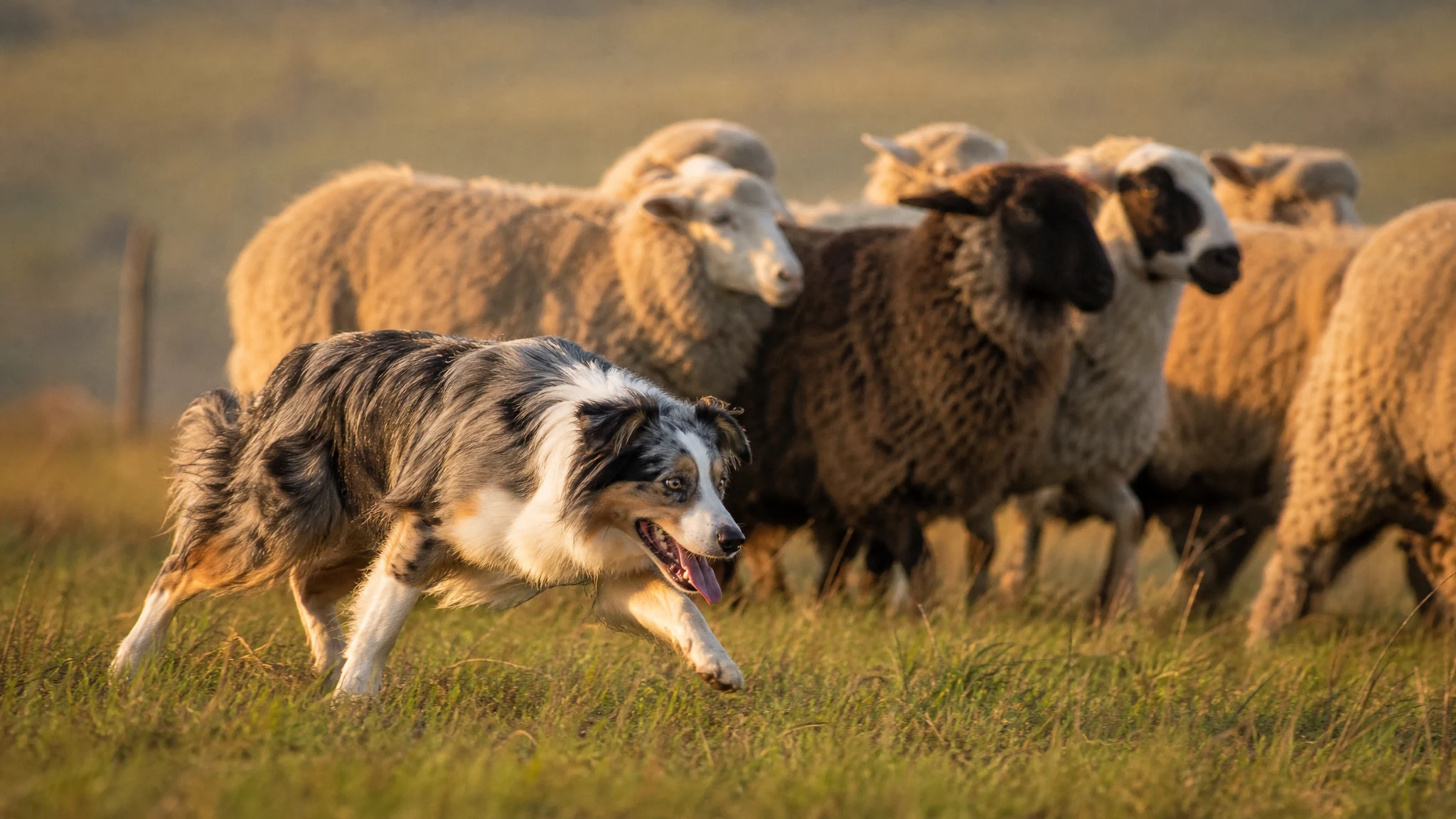
Farm and ranch stock work
This is the breed's original purpose, according to USASA. The dog works livestock alongside a handler. It uses the same traits that cause trouble in a pet home: close attention to movement, a drive to control it, and a lot of stamina.
Service and utility work
USASA says Aussies have worked as seeing-eye dogs and as utility dogs for the physically handicapped. That speaks to the breed's focus and willingness to work with people. It does not mean every Aussie is suited to service work, and a pet cannot simply be declared a service dog. If this path interests you, ask a recognized service dog organization how they evaluate dogs.
Sled work
USASA notes the breed is also used as sled dogs in northern areas. For most owners this is a fun fact rather than a plan, but it shows how much endurance the breed can have.
AKC sanctioned competitive events
USASA says it runs AKC sanctioned competitive events. The specific list was not something I could confirm, so check the USASA website and the American Kennel Club (AKC) event listings for what is currently offered and what the rules are.
Step 2: Get a Veterinary Check First
Hard exercise asks a lot of joints, eyes and the whole body. Before you start, book a visit and tell your veterinarian what you plan to do.
USASA's Health & Genetics Program lists the screens it cares about. For its CHIC program, hip and elbow evaluation through OFA and an eye evaluation by a certified veterinary ophthalmologist are mandatory. Autoimmune thyroiditis, Collie Eye Anomaly and multiple drug sensitivity (MDR1) are optional for CHIC. USASA also lists other DNA tests, including degenerative myelopathy, hereditary cataracts (HSF4) and multifocal retinopathy 1.
Ask your veterinarian which of these matter for your dog, and ask the breeder what the parents were tested for. Any question about pain, limping, vision or reaction to a medication goes to your veterinarian, not to a club trainer or a website.
Step 3: Choose an Activity and Find a Local Group
Pick one activity to try first. Do not sign up for five. Start from what you can realistically reach.
- Ask the breeder. A good breeder often knows people who work stock or compete. USASA's buyer checklist tells buyers to discuss herding instinct with the breeder, so this is a normal conversation to have.
- Contact the parent club. USASA is the parent club to the breed. Its website is the place to ask about events, affiliated groups and local contacts.
- Check AKC listings. The AKC publishes information on its sanctioned events and clubs. Look for clubs near you and see what they offer to beginners.
- Look for local training clubs and facilities. Many towns have dog clubs that hold classes. Ask about class size, how they teach, and whether you can watch first.
- Ask about stock work. If you live in farm country, ask whether anyone offers introductory sessions with livestock. Ask how they judge whether a dog is ready, and how they keep animals safe.
Visit as an observer. Watch how the instructor treats dogs. You want treats, praise, toys and calm guidance. Walk away from any group that relies on shock, prong or choke collars, alpha rolls, scruffing or dominance talk. The American Veterinary Society of Animal Behavior (AVSAB) recommends reward-based training, and so do we.
Step 4: Build Foundation Skills at Home
Every sport and job rests on the same basics. A dog who cannot settle, come when called or pay attention near distractions will struggle in any class.
Our complete Australian Shepherd training guide covers these basics in detail. For sports readiness, focus on these:
- Name response. Say the name, then reward the moment your dog looks at you.
- Recall. Start in a quiet room and add distance and distractions slowly. Make coming back the best thing that happens all day.
- Sit, down and stay. Keep sessions to a few minutes. Reward calm, not just compliance.
- Loose leash walking. Reward the dog for staying near you rather than correcting pulling.
- Settling on a mat. A dog who can switch off between turns is easier to train, and it helps with the high energy USASA describes.
USASA says the breed is easily trained, but easy does not mean instant. Short, upbeat sessions with clear rewards work better than long drills. Stop while your dog is still keen.
Step 5: Plan Daily Exercise and Mental Work
A weekly class is not enough for a breed with the needs USASA describes. Build a daily routine around three parts.
- Physical exercise. Walks, off-leash running in a safe fenced area, or games of fetch. Your veterinarian can help you set limits, especially for young dogs whose joints are still developing.
- Thinking games. Scatter treats in the grass, use puzzle toys, or teach a new trick each week.
- Rest. Plan quiet time after hard sessions. A tired dog who never settles may be wound up rather than satisfied.
The USASA material does not give a number of minutes per day, so I will not invent one. Watch your dog. A dog who is destructive, restless or constantly barking at the window may need more outlets, and a dog who is limping or reluctant may need a veterinary visit.
Step 6: Manage the Herding Instinct
A working instinct does not switch off at the end of class. Aussies may try to herd children, other pets or moving vehicles. Plan for that.
- Reward calm behavior when something moves fast, such as a bicycle or a running child.
- Teach an "over here" cue to bring your dog back to you.
- Keep your dog leashed or fenced near roads.
- Supervise all play with children and give the dog a place to retreat.
- Give the instinct a legal outlet, such as a structured activity through a club.
USASA says the breed can be highly territorial and protective of its owner's possessions. Teach a trade game, where your dog gives up an item in exchange for a treat, and do not punish guarding. If it escalates, contact a qualified, reward-based trainer or a veterinary behaviorist.
Socialization matters too. USASA's buyer checklist asks that a puppy be well socialized, and the breed standard says the breed may be somewhat reserved at first meeting. It also treats shyness, fear or aggression as faults. Introduce new people and places gently, and never force your dog into a situation it finds scary.
Step 7: Start Small and Review
For your first session, aim to leave while your dog is still eager.
- Arrive early so your dog can look around before it has to work.
- Tell the instructor about your dog's age, health history and any worries.
- Keep your own expectations modest. Seeing the activity may be the whole goal for day one.
- Reward often, and pause if your dog looks overwhelmed.
- Afterward, write down what went well and what was hard.
After a few weeks, ask yourself whether your dog is enjoying the work, whether it recovers well, and whether life at home has improved. If not, adjust the activity or try something else. There is no single right sport for the breed.
Tips for Success
- Keep sessions short and end on a win.
- Use your dog's favorite reward for harder tasks, and the lower-value reward for easy ones.
- Vary the activities. An Aussie can get bored of repetition.
- Be consistent in how you give cues.
- Stay calm. Your dog reads your mood quickly.
Common Mistakes to Avoid
- Skipping the veterinary check. A hidden joint or eye problem can turn a hobby into an injury.
- Doing too much too soon. Enthusiasm is not the same as fitness, especially in young dogs.
- Using exercise as the only outlet. A fitter dog with no mental work may simply have more energy to get into trouble.
- Ignoring herding behavior at home. Nipping at heels is a habit that can form quickly if it goes unaddressed.
- Choosing a club by convenience alone. Watch how they treat dogs before you sign up.
- Comparing your dog with others. Individual dogs vary, and the breed standard gives size ranges, not guarantees about ability.
What Results to Expect
Many owners find that a dog with a regular, structured outlet is easier to live with, but results depend on the dog, the activity and your consistency. With steady, reward-based practice, you may see better focus, a stronger bond and a calmer evening routine. You may also find your dog settles more easily after a good session.
It may take weeks or months to see a pattern. Some dogs take to an activity quickly, and others need several tries. Not every dog will want to herd, run or compete, and that is fine.
Size and Fitness Notes
USASA's breed standard gives height as 20 to 23 inches for males and 18 to 21 inches for females. Its overview page gives weight as about 50 to 65 pounds for males and about 40 to 55 pounds for females. Your own dog may fall outside these ranges. Ask your veterinarian what a healthy weight looks like for your dog, since extra weight adds stress to joints during any sport.
Sources
- United States Australian Shepherd Association, The Australian Shepherd
- United States Australian Shepherd Association, Breed Standard
- United States Australian Shepherd Association, Health & Genetics Program
- United States Australian Shepherd Association, Buyers Checklist
- United States Australian Shepherd Association